

The Changing of the Guards
Political evolution driving a new world order
The shock victory of 43 year old Pita Limjaroenrat from the progressive youth-led Move Forward party in the recent Thailand elections perfectly captures the wind of change seen in ASEAN and many parts of emerging markets. This phenomenon while may vary in specifics, sees common driving factors in public discontent amidst chronic inflation and widespread corruption, which is perceived to be the source for persistently feeble income levels amongst the masses. With the inherent disparity in income so prominently exposed during the pandemic, members of the youth (and young adults) who in many parts of the world are now allowed to vote, have decided against the established hierarchical structure of society, in favour of a more equal distribution of opportunities and outcome.
 |  |
This movement towards the left has driven change in other ASEAN countries such as Malaysia, Indonesia and some say Philippines (though we disagree) while equally in other parts of emerging markets such as Latin America, where countries such as Argentina, Mexico, Colombia, Chile, Honduras, Peru, Bolivia and Brazil have all elected leftist governments of late. We believe this trend will endure given the increasing access to information through social media, as smartphone penetration continue to rise in these emerging economies. This occurrence is categorically significant, transforming the youth from what was previously a disinterested crowd to one which is now politically motivated for change.
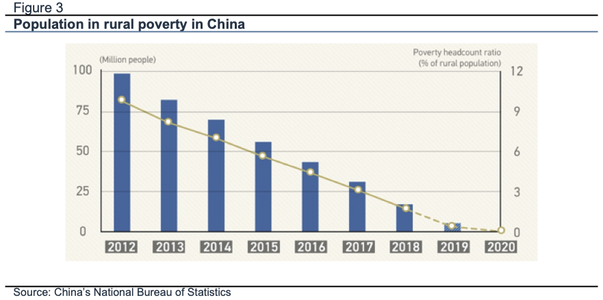
Although the development towards a more egalitarian state with shared prosperity should be encouraged, it remains to be seen if a leftist ideology is the medium to deliver the outcome considering the track record of historically being met by lack of economic development and the birth of autocratic leaders. At least for now, it would seem that many emerging economies are willing to consider a center-left approach as the appeal of the modern-day edition which is demonstrated quite fashionably in the case of China, resonates well. The survival and continuity of these new governments will depend on how well they balance this need for equality while also ensuring that the structural reforms do not result in economic destruction.
In terms of investment implications, the leveling of the playing field in the near term might result in a period of uncertainty for the investment community. Some areas which we are already seeing happen on the ground include:
(1) Higher costs for companies– some of these are the increasing of minimum wages and higher corporate tariffs and taxes;
(2) Liberalisation of industries: Potential breaking up of monopolies through deregulation and the introduction of more competition;
(3) Barriers : Protectionist/nationalistic policies against foreign investments in strategic areas – could lead to inefficiencies and abuse.
Zooming out onto the macro level, the global stage is also seeing a break away from the establishment, as the fractious relationship between the West and China-Russia deteriorates further through the ongoing proxy war in Ukraine. This movement is gathering support and can be seen through the vocal support for the BRICS establishment (BRICS is a grouping acronym referring to the developing countries of Brazil, Russia, India, China, and South Africa which are identified as rising economic powers) where many more resource rich emerging economies, are today seeking to join the bandwagon. This shift is significant, for it has the implications of rerouting global trade and that of the supply chain whilst also providing an alternative trading currency to the often-weaponized US dollar in search of a more stable resource-backed currency. In this instance, the pains of the past for many emerging countries which were largely colonized by the West, are starting to resonate, lending further support to the seemingly more equitable and inclusive offer being shown by the Chinese through the BRICS.
Notwithstanding the fact that the mission of BRICS is still in its infancy, the persuasion of the numbers suggests that the association could possibly be a master of its own destiny given its collective status as the largest economic and most populous bloc in the world. Add these factors with the vast USD380 bil trade surplus it recorded in 2022 (largely contributed by China), suggests a fundamental ability to be self-sustaining without succumbing to the vulnerability of external factors as seen in the case of the European Union, which in 2022 recorded a trade deficit of over USD470 bil.
While it is conceivable to predict the success of the BRICS, the reality of numbers today will cool off any calls for the death to the dollar, where 84% of global trade, 58% of global foreign exchange reserves and a significant majority of foreign debts are in fact US dollar denominated. Given the stickiness of these funds and the system’s inherent need for dollars, it is likely that the influence of the BRICS might not exactly permeate overnight. That said to envisage a base case where dollar dominance gradually erodes through the availability of a credible alternative, would not be too far-fetched.
 |  |
In the case of ASEAN, as the relationship between the West and China is becoming increasingly contentious, ASEAN is refusing to pick a side, choosing instead to appear Neutral, at least officially. That said, the statistics of China’s influence speaks volume for it is the region’s number one trading partner and has been since 2009 with over USD900bil in bilateral trade per annum making up >35% of all trade for the region. Besides that, in anticipation for further deterioration of US-China relations, strategic moves from China through investments have already taken place to pave the way for ASEAN to take on a bigger role in various areas such as manufacturing, infrastructure, markets and others. At this point, China is already the largest foreign investor in Philippines, Indonesia and Malaysia, a stranglehold which will likely endure. Considering these circumstances, it is plausible that in all likelihood, ASEAN is and will veer towards that of China. Some, like Indonesia, are already starting to take this stance, seeking an entry into the BRICS fraternity.
The direction of interest rates may dominate market conversations in the near term, but as we contemplate these current developments from a strategic standpoint, it is safe to assume that we live in times of change, this from a global, governmental, technological, environmental, economic and societal aspect. The youth of today are the citizens of tomorrow and in this case, it is seeking vehemently to correct the disparities of the past. While this presents a period of higher uncertainty, it also avails of multi-year structural investment opportunities which would otherwise not be present in a business-as-usual environment. Much excitement awaits.
Author Certification:
All views presented above strictly reflect our personal views at the time of publishing. It should in no way be viewed as intending to dictate, advise in investment decisions or to solicit for business.
Important Disclaimers:
This document is produced and distributed by Karrin Associates Pte. Ltd. It has sole ownership over its materials and information provided in this document is strictly confidential. Any confidentiality breaches should assume any and all liabilities.
Information provided in this document is not audited and should not constitute investment advice or a recommendation. The recipient agrees that this document shall be used solely as references and not for any other purpose, commercial or otherwise. Any investment decision must be made solely on the basis of the recipient’s own due diligence. Karrin Associates and its subsidiaries, affiliates, controlling persons, directors, officers or employees do not accept any liabilities whatsoever for any decision taken based upon the material.